Warriors of Istria Through Time
Did you know, young Temporus, that the text you have just read was written by a Frenchman? It contains a few mistakes (spelling, grammar and style). For every mistake you find, you earn the right to be a commander in one Temporus battle.
HISTRI: My Illyrian Tribe
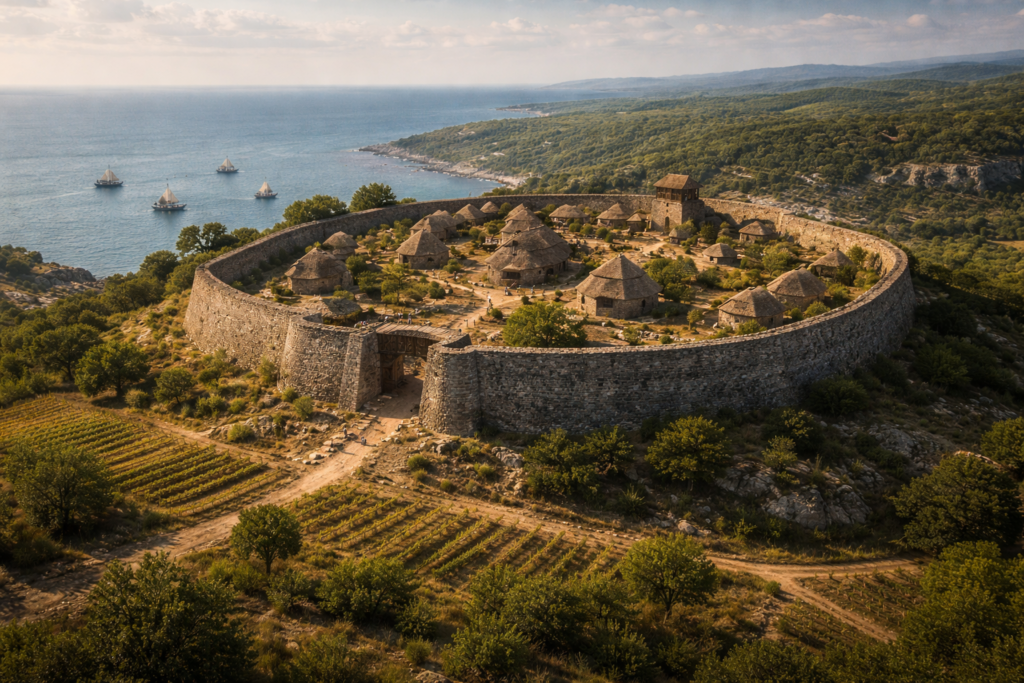
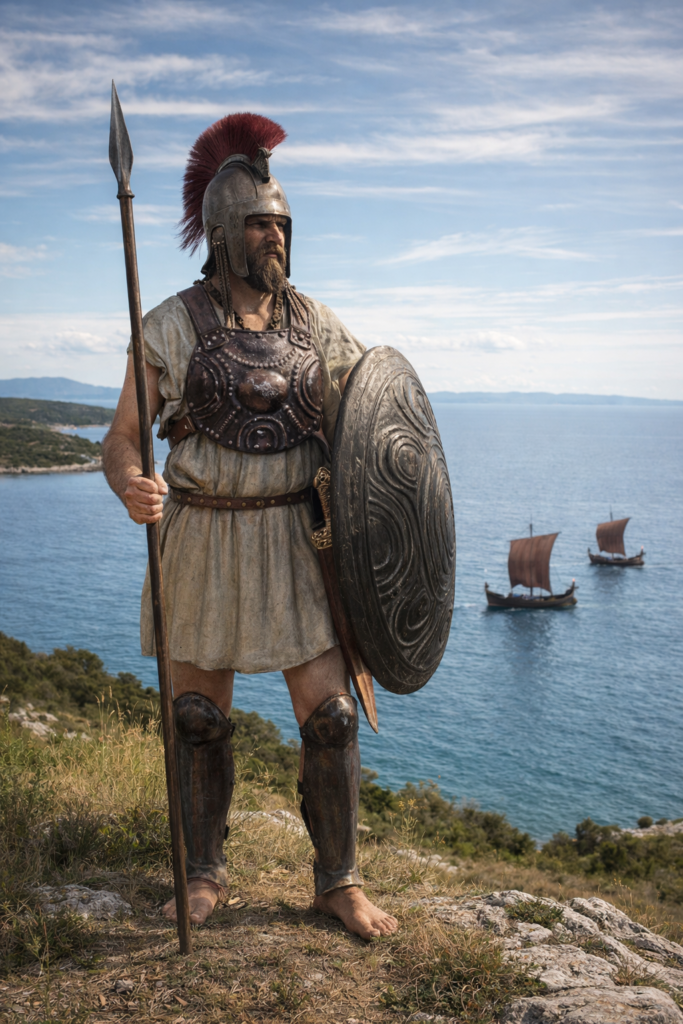
Greetings, young Temporus. I am Epulo, leader of the Histri, a proud Illyrian people of the Iron Age. We were among the first to live in these rich and wild lands that you now call Istria, and to which we gave our name. But that was almost 3,000 years ago.
We live in Gradine (Castellieri): fortified settlements built on hilltops, surrounded by massive stone walls that can reach 7 metres in height and 5 metres in thickness. From these heights, we can see far into the distance: the sea, the forests, the roads. Nothing approaches without being noticed. And you, if you look carefully around you, among the forests and stones, you may still find traces of our past, like those in Kunci, near Labin, where perhaps one day you will come to train and fight alongside me.
To survive, we hunt, farm the land and fish along the coast. But we are also people of the sea. When necessary, we become pirates, striking swiftly from our boats to take what we need. The sea feeds us, but it is also a battlefield. Our land is rich. And wealth attracts greed. That is why it must be defended.
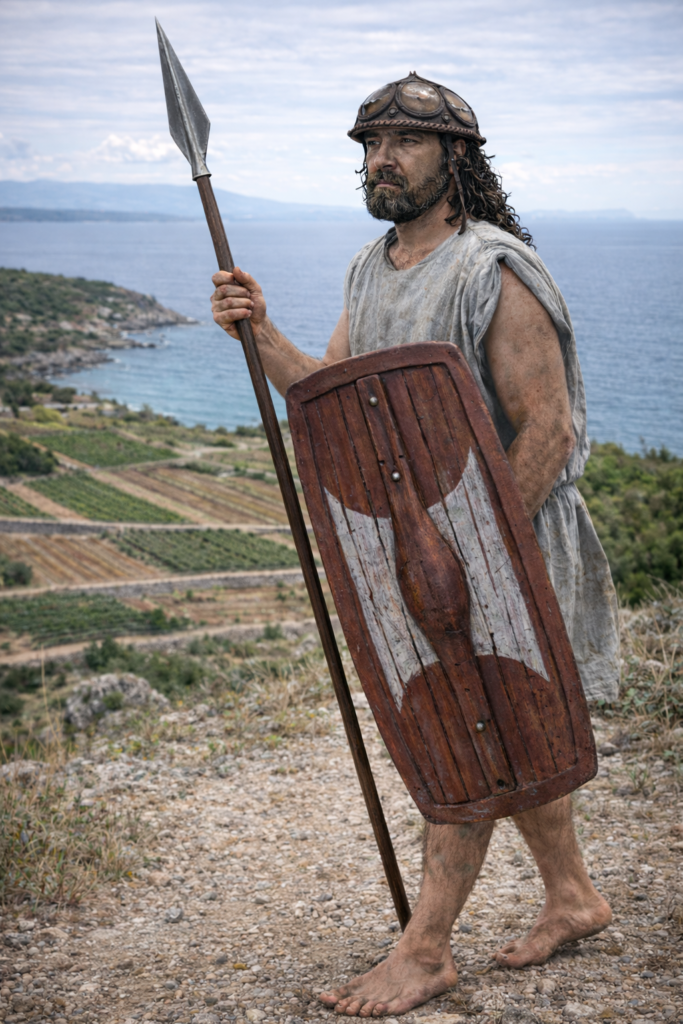
This is what my humblest warriors look like: a spear, a wooden shield, sometimes a simple helmet. They are fast, resilient, and know every hill, every path.
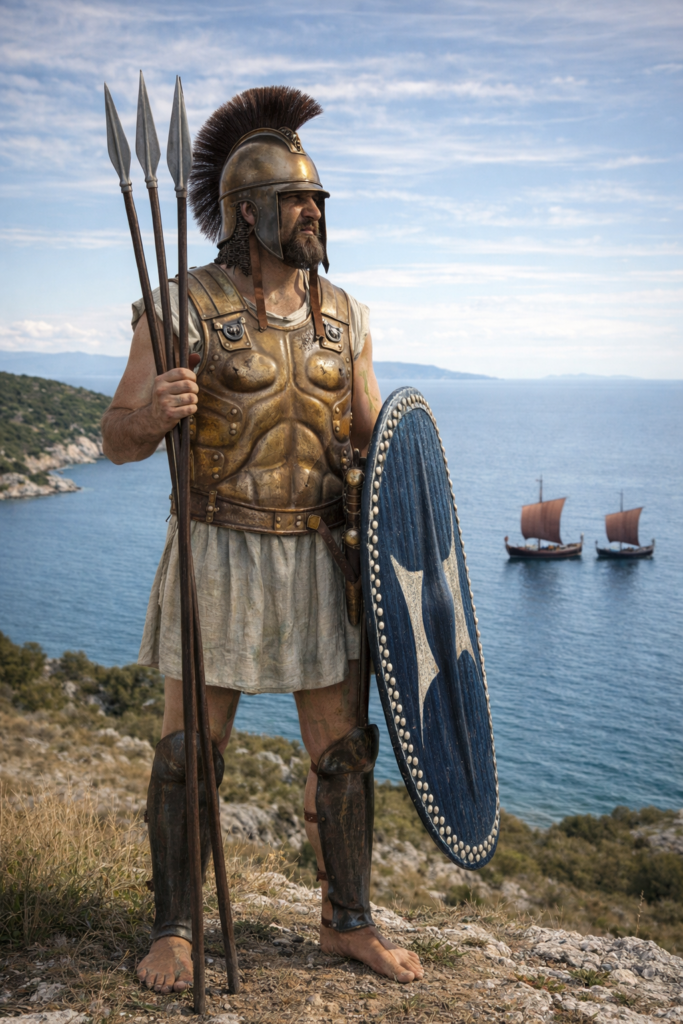
But among my people there are also chieftains, wealthier warriors. They carry swords, Illyrian-style helmets, reinforced shields, as well as metal protection for the torso or legs. Their task is to hold the line, lead the others, and never retreat.
The Celts, Those Fearsome Warriors
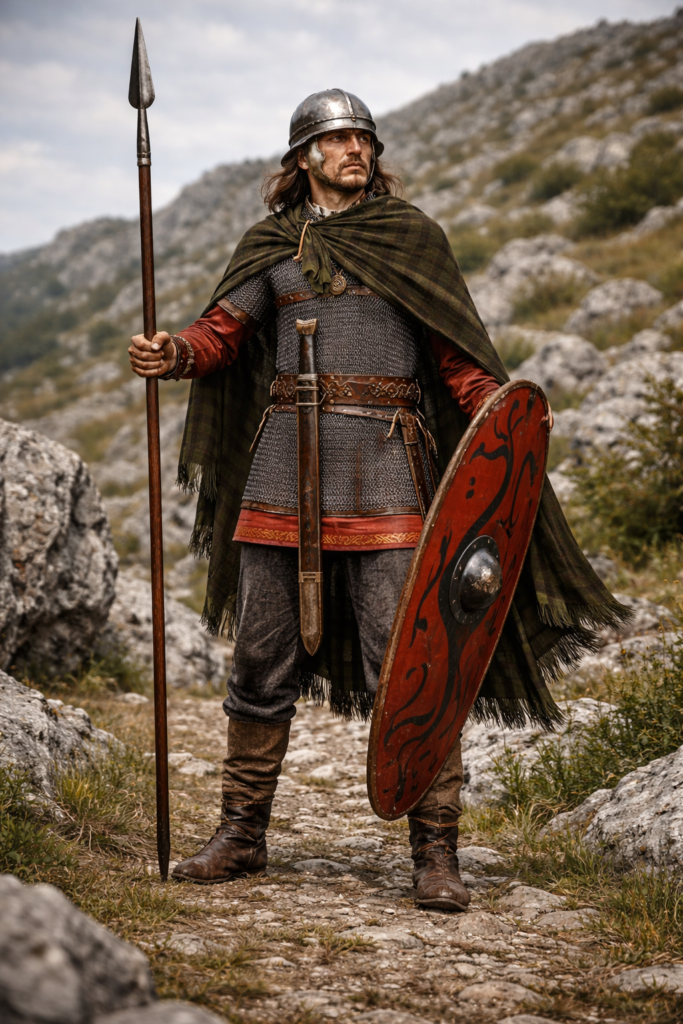
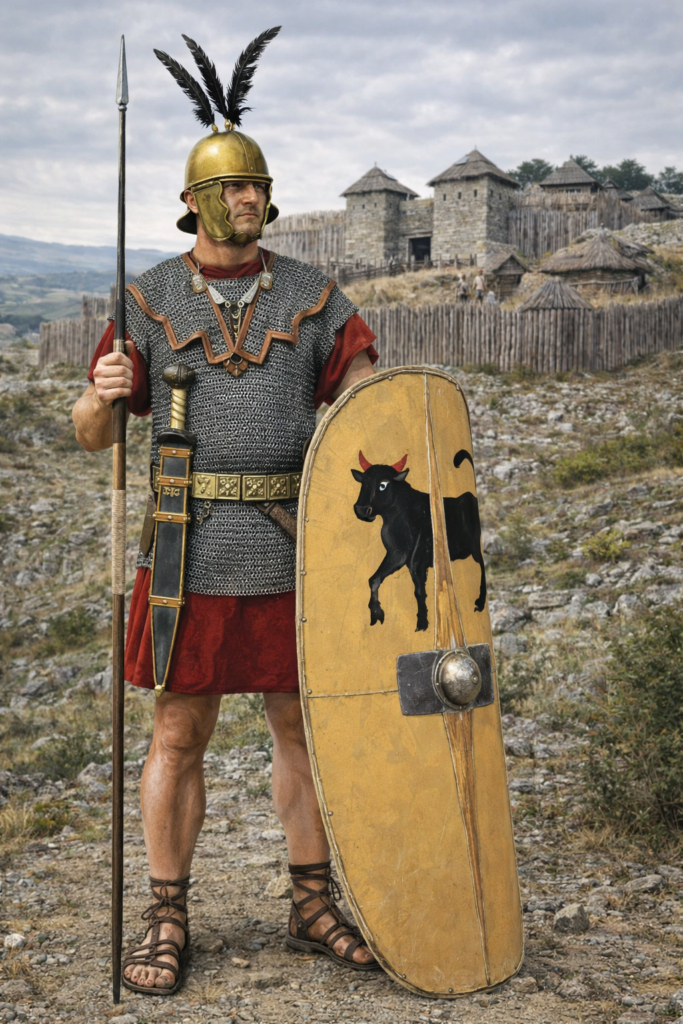
That over there is a Celtic warrior. He came to these lands around 2,400 years ago. They fought mostly against our neighbours in Dalmatia, but here in Istria, too, we sometimes had to face them. Their highly offensive equipment surprised us: long swords, large shields, metal helmets, and sometimes chainmail (flexible armour made of interlocking metal rings), rare and impressive for that time.
But know this, young Temporus: here in Istria, our warriors fought bravely, and the Celts never settled permanently in our lands.
The Romans and Their Fearsome Armies
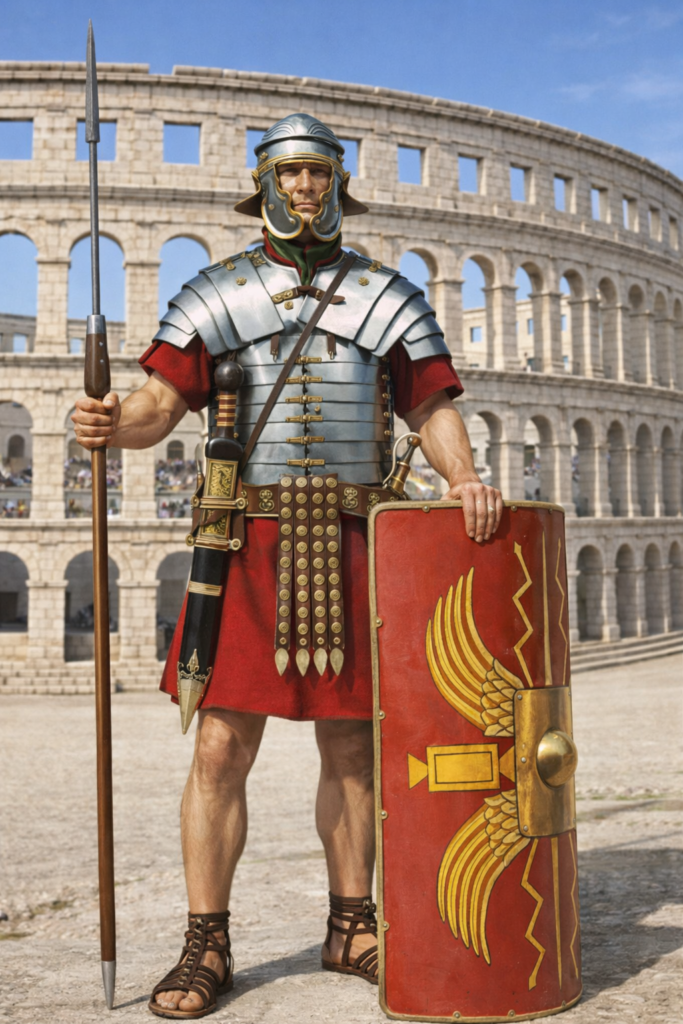
Unfortunately, around 2,200 years ago, the Romans began attacking us. Of course, they wanted to conquer, but it must be said that we also often caused them trouble through our piracy. They had an exceptionally well-organised army. A Roman soldier of the Republican era wore a metal helmet with cheek guards, armour and sometimes chainmail adopted from the Celts. Their shield, the scutum, was large, oval or rectangular, and provided excellent protection. Their auxiliary troops harassed us by throwing light but deadly spears. Then the heavy infantry advanced. Before the clash, the legionaries threw the pilum, a heavy spear hurled from a short distance to break our ranks and disable our shields. Then hand-to-hand combat began, and we had to face the fearsome gladius, a short sword designed for thrusting.
They won the war, and peace was established. Although our hearts remained Histrian, we began to live like the Romans, less on the hilltops and more in the lowlands. It must be said that the Roman army, of which we eventually became a part ourselves, was very powerful. Later, it adopted even more complete equipment: segmented armour, a reinforced helmet, a standardised shield and common discipline throughout the Empire.
Vikings: People a Little Like Us
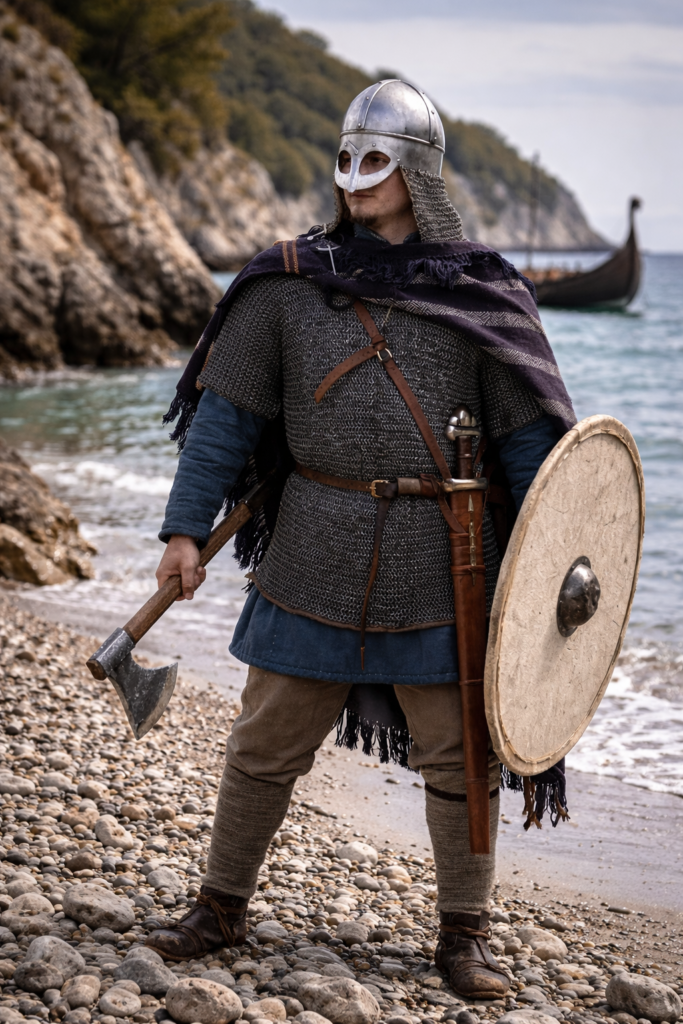
But the Roman Empire collapsed, and we went through long periods of unrest and numerous invasions by Goths, Huns, Lombards, Avars and Slavs. Among those who brought unrest, some reminded us of the brave Histri. They were the Vikings, proud seafarers from the north, sometimes traders, sometimes raiders or fearsome warriors. They did not conquer us, but they carried out raids, coming by sea in their fast warships, skeids, which we now call drakkars because of their dragon-headed prows. The Vikings, protected by their round wooden shields, fought in a very different way: with swords, spears, but also axes. Some protected their heads with conical iron helmets, while others wore particularly impressive helmets with masks protecting the eyes and nose.
Knights of the 11th Century
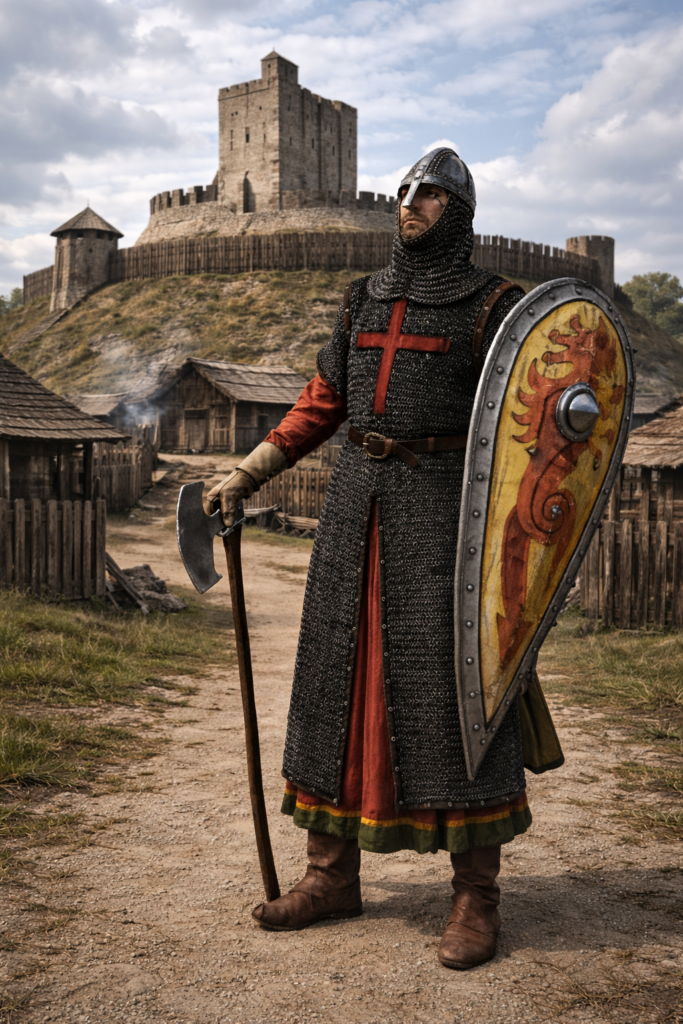
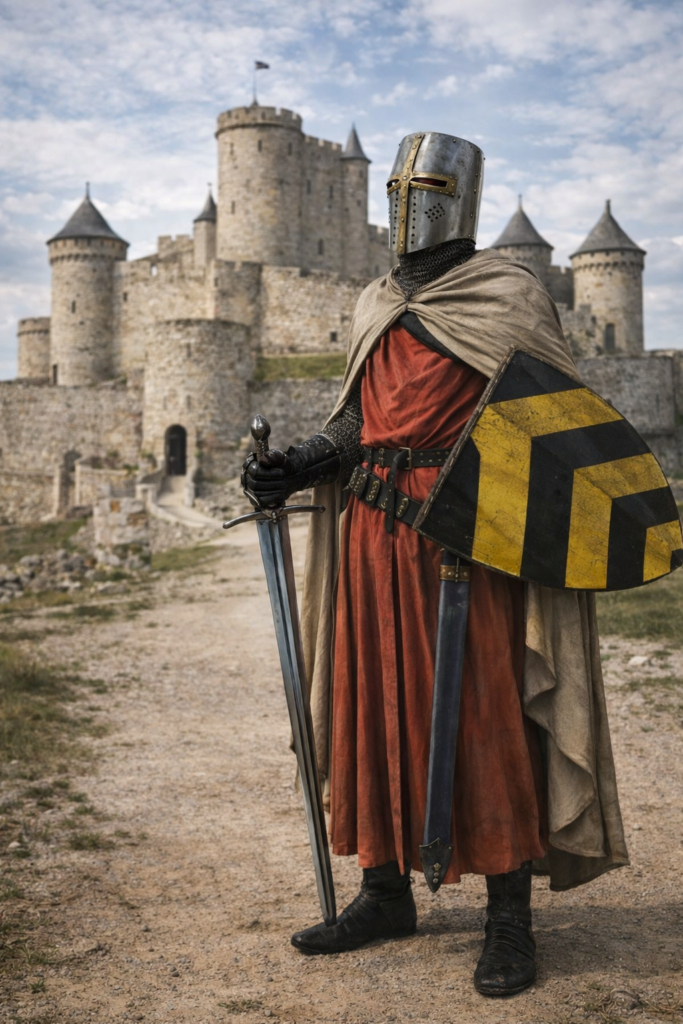
A little respite came only much later, in the Middle Ages, thanks to the construction of castles and the presence of knights. In the 11th century, a knight mainly wore mail armour: a long metal hauberk that protected the body, complemented by mail protection for the hands, arms and legs, while his head was protected by a helmet. Armed with a larger sword, he protected himself with a shield known as an escutcheon. He fought on horseback or on foot, well protected but still relatively mobile.
Knights of the 13th Century
In the 13th century, a knight’s equipment gradually evolved towards better protection and a more clearly defined silhouette. Mail remained predominant, but was supplemented by rigid reinforcements on certain parts of the body. The overall form became more refined, protection improved, while mobility was preserved.
Knights of the 14th and 15th Centuries
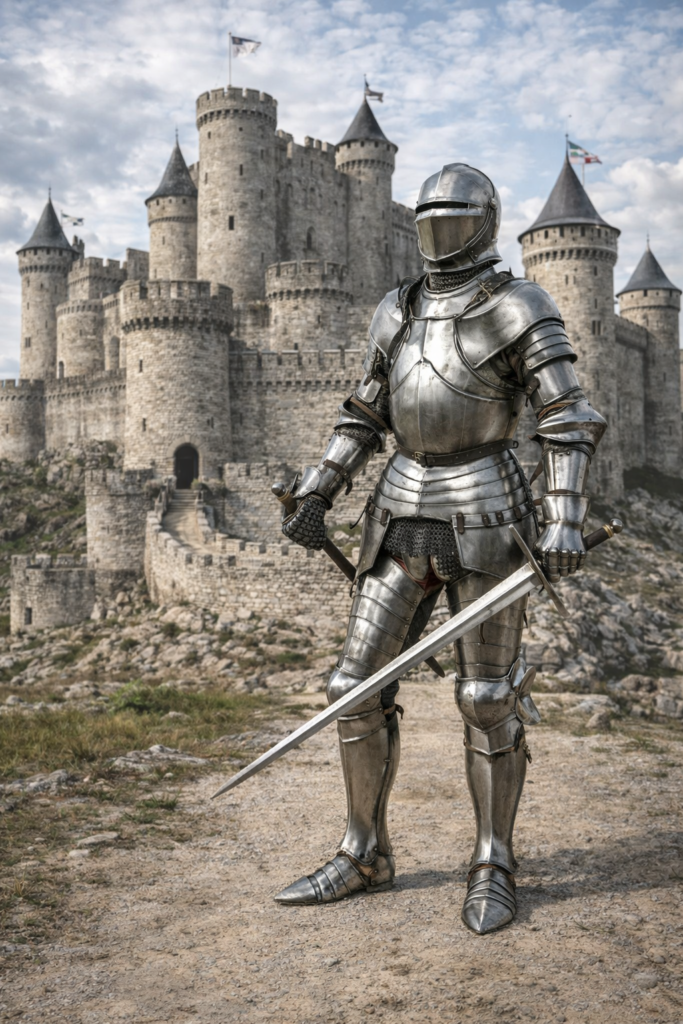
Later, in the 14th century, knights gradually adopted plate armour. Metal plates protected the torso, arms and legs, and were joined together in a way that allowed freedom of movement. The head was protected by a helmet with a visor, while mail continued to be worn underneath to protect vulnerable areas. Over the mail or armour, a knight often wore a tabard or surcoat in the colours and symbols of his lineage, making him recognisable on the battlefield. Better protected than ever before, he became a heavily armoured warrior, extremely dangerous in close combat, and a symbol of power and authority on the battlefield.
Temporus: The New Warriors of Istria
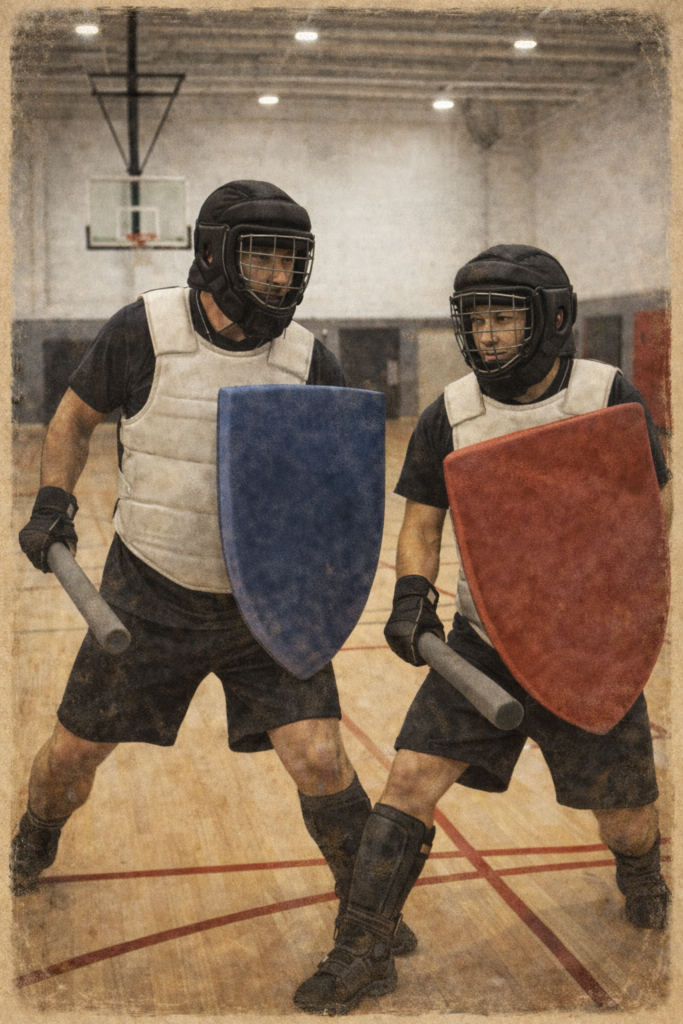
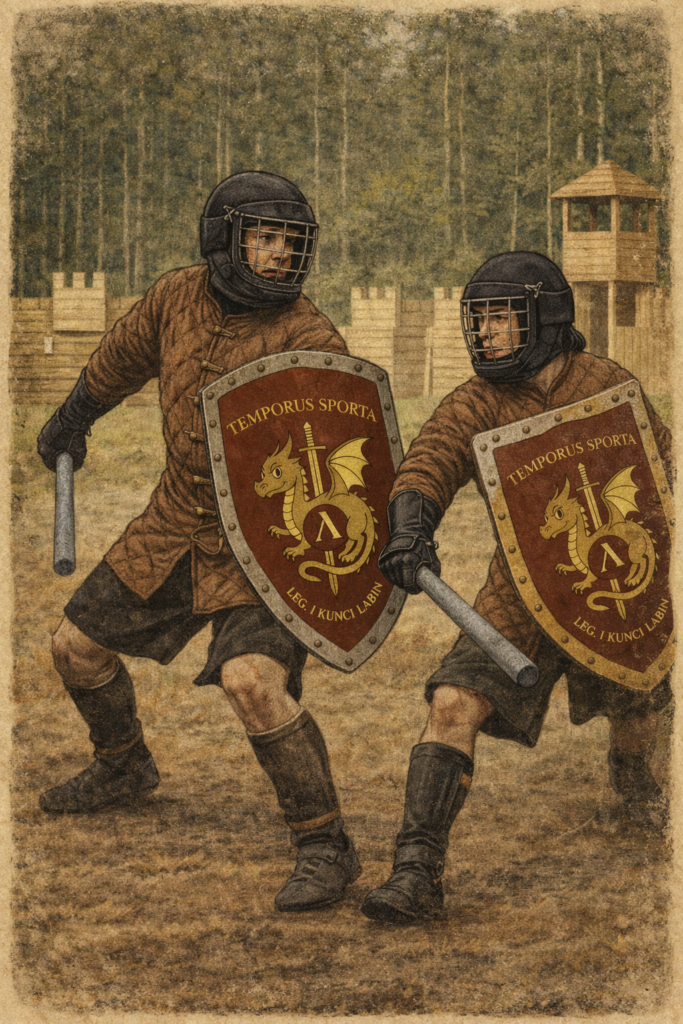
Today, young warriors are bringing these forms of combat back to life, but for sport and enjoyment. Some do so with metal weapons and equipment, in a sport known as buhurt. Others use foam equipment to be faster and more agile; this is known as Soft Armored Fighting. This is the discipline we practise at Temporus.
But you haven't asked me yet, young Temporus, what knights wore under their armour... It was a gambeson, a thick, padded garment worn to cushion blows and protect the body. We sometimes use it during training too, for protection... but also to give ourselves a little more style.